Hereditary/congenital
Question to answer
Is hip dysplasia included or excluded?
Record to preserve
Coverage wording and state amendment

Audit hip-dysplasia coverage in the hereditary, orthopedic, history and bilateral clauses before relying on a benefit headline.
Use these checkpoints to frame the literal question before reading the full guide.
Dog insurance can include eligible hip-dysplasia treatment: Pets Best publicly lists hip dysplasia among hereditary conditions its accident-and-illness plans may cover. That is conditional evidence, not a promise for a dog with earlier mobility signs or proof that every state form treats both hips the same way.
The sections below show how to verify the answer and what can change it.
| Clause | Question to answer | Record to preserve |
|---|---|---|
| Hereditary/congenital | Is hip dysplasia included or excluded? | Coverage wording and state amendment |
| Orthopedic waiting | Is there a separate period for hips, knees or all orthopedic conditions? | Actual declarations and timing endorsement |
| Pre-existing | Do earlier signs, advice or treatment affect eligibility? | First mobility notes, not just diagnosis date |
| Bilateral | How does one hip’s earlier history affect the other? | Both-side examination/imaging history and exact exclusion |
Pets Best’s current overview names hip dysplasia subject to its history and waiting rules. Its public Alabama-labeled IAIC-PB10001-ILL specimen separately defines hip dysplasia as bilateral. A definition alone does not prove that a particular bilateral exclusion is operative; reconcile the relevant state exclusions and endorsements rather than importing a rule from an unrelated sample.
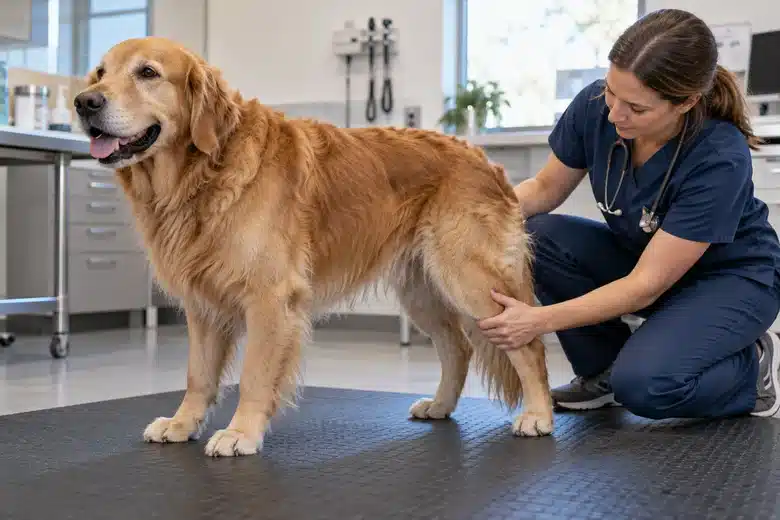
Keep policy terms, deductible, reimbursement and limits beside the quote so the comparison stays consistent.
ACVS describes hip dysplasia as a developmental joint problem with hereditary risk, possible mobility signs and diagnostic assessment. Clinical options depend on the dog. This information explains why the records may span several visits; it does not establish that an insurer pays for them.
| Care component | Coverage check | Evidence for review |
|---|---|---|
| Initial examination | Whether examination fees are selected | Consultation invoice and onset history |
| Imaging and diagnostic work | Eligible condition and test definitions | Veterinary findings and itemized imaging charges |
| Specialist consultation or surgery | Referral/provider requirements and benefit scope | Referral letter, estimate and operative record |
| Medication and rehabilitation | Formulary and optional-benefit language | Prescription and treatment plan |
| Later opposite-hip care | History plus bilateral wording | Dated records for both sides |
For an invented audit, suppose left-hip stiffness was noted before enrollment but right-hip dysplasia was diagnosed afterward. Do not answer the right-hip claim from the later diagnosis date alone. Mark the first sign, start date, relevant waiting endpoint and both-side history, then test the actual clauses. The same evidence discipline applies when a puppy has no recorded signs; absence of a diagnosis is not a guarantee.
The public overview supports a conditional coverage possibility. An applicable hip-specific endorsement and full bilateral exclusion reconciliation were not established here, so this guide does not certify a product for a particular hip history or name a best insurer.
No. The relevant history and policy definition decide; heredity and pre-existing status are different questions.
No. Review the first hip’s history and any applicable bilateral wording before drawing that conclusion.
Keep the policy terms beside the price, then continue to rates when the comparison is clear.